
The essential answer
Plan sightseeing with your family and confirm suitable seating, ages and tour conditions in advance. For families, the best route is rarely the one with the maximum number of stops.
What you will experience
Children often respond better to a sequence of recognizable landmarks, photo opportunities and short explanations than to a rushed series of museums. A private golf cart can reduce transfers between neighbourhoods, while maintaining an outdoor sightseeing experience.
Suggested landmarks and itinerary
Map points show places of interest, not drivable roads. Stops, access and order depend on the booked tour.
-
Turtle Fountain
The Turtle Fountain in Piazza Mattei is the historic starting landmark near Via della Reginella.
-
Piazza Venezia
This busy central square links the Vittoriano monument with routes toward the Capitoline Hill and Roman Forum.
-
Colosseum
The monumental ancient amphitheatre is the classic visual introduction to Imperial Rome; interior tickets are separate.
-
Pantheon
A remarkably preserved ancient Roman building; entry is separate from external sightseeing.
-
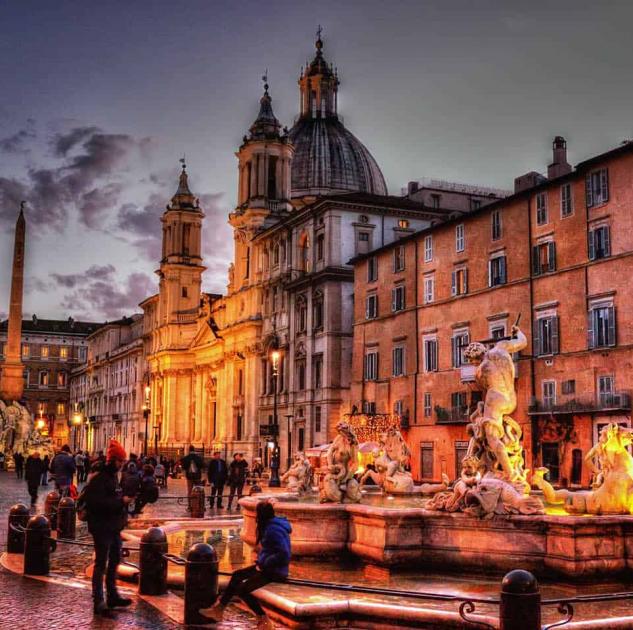
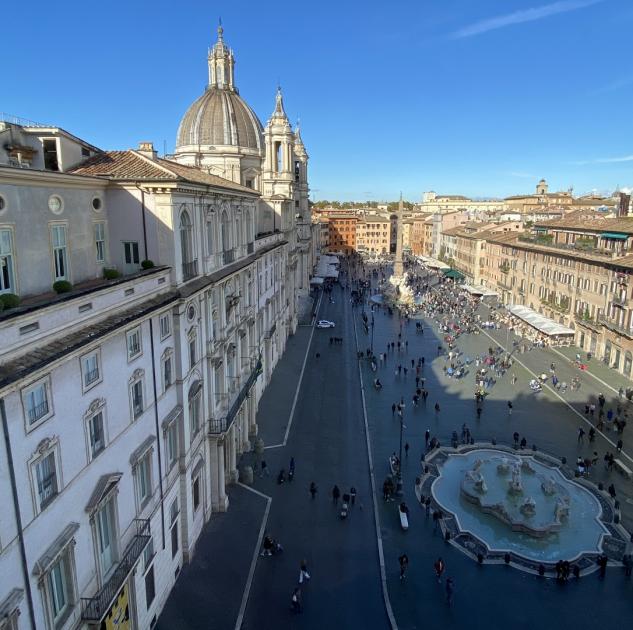
Piazza Navona
An elongated Baroque piazza built over the ancient Stadium of Domitian, best enjoyed on foot.
See route highlights on the map
Map points show places of interest, not drivable roads. Stops, access and order depend on the booked tour. · © OpenStreetMap contributors
OpenStreetMap ↗Practical planning advice
Before requesting a tour, give the ages of every child. Ask about seat capacity, child-restraint requirements, stroller space and the operator’s current safety rules. Plan water breaks and pedestrian sections near the Pantheon or Piazza Navona rather than promising door-to-door vehicle access.
Request availability and prices →Frequently asked questions
Can babies or young children join?
Ask the operator to confirm age and seating rules for your specific group before booking.
Can we bring a stroller?
Tell the team the stroller size and number of passengers; space must be confirmed in advance.